
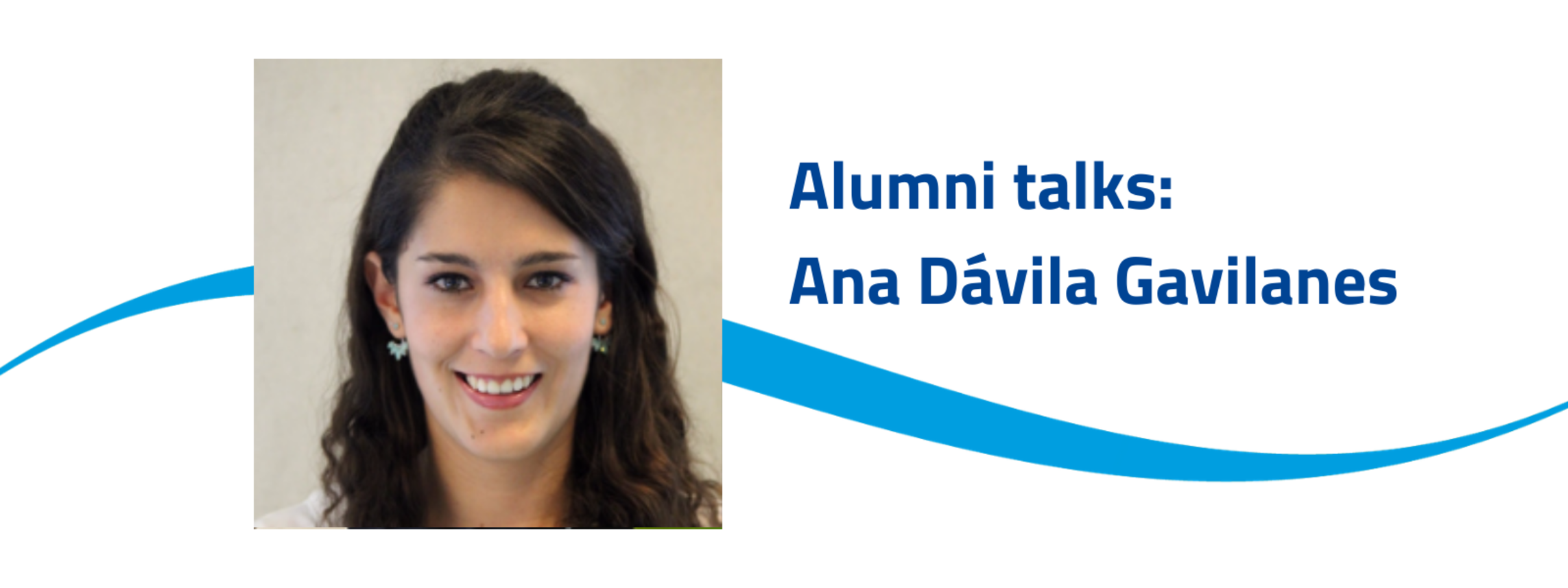
Alumni talks: Ana Gabriela Dávila Gavilanes
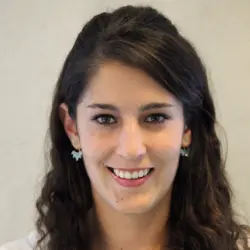
Head of the Sustainable Mobility Department
at Automobile Club of Ecuador
Electromobility Consultant for Ecuador
at UN Environment Programme
SELECT - 2015 intake
LinkedIn Ana
Transport is a significant piece of the energy transition puzzle and in our latest catchup with EIT InnoEnergy alumni, we spoke with Ana Gabriela Dávila Gavilanes about her career in sustainable mobility.
What is your current job or role? Is there a link with the energy transition?
I'm currently working as the Head of the Sustainable Mobility Department at the Automobile Club of Ecuador and as the Electromobility Consultant for Ecuador in the UN Environment Programme (UNEP). Both positions are completely related to energy transition. Transport is one of the main contributors to pollution, energy consumption and therefore to climate change, so a transition to a more sustainable transportation is a key action. I worked in the promotion of sustainable mobility and electromobility through technology projects in Ecuador.
Is sustainable mobility an exciting sector to be a part of?
Sustainable mobility is a relatively new element in the climate change fight agenda; however, it is one of the most important. In Ecuador, as I started working on this (in 2018) it was something new, especially electromobility and there were not many professionals working on this. Three years later this has greatly changed, there are a lot of national and international organisations working for better and more sustainable mobility in the country.
Which skills and experience do you need for your current job?
The Master’s programme was fundamental for me to acquire all the skills needed for my work because our projects don't involve only technology, they also require economical, environmental and social capacities to develop an integral project. Indeed, I started getting into sustainable mobility thanks to my Master’s thesis, which I did on the transformation of road transport to electric mobility in the Galapagos Islands and I actually kept working on it since. My Master’s thesis opened the door of sustainable mobility for me.
What was the main learning you took from your studies?
It would be difficult to choose only one learning from the studies. I would say that I use all the skills developed during the Master’s courses in my everyday work. For me, the approach of the programme, taking the three perspectives: environmental, economical and social dimensions of a project really helps to create a practical and real solution.
What was your first thought when you graduated? Did you feel prepared or daunted by going into the "real world"?
I was lucky as mentioned before to do the thesis in sustainable mobility because it helped me to have contacts with experts and work in the field. When I graduated, of course I was anxious about what would come next, but I kept working on mobility thanks to the thesis and in this sense, it was easier for me to enter the working field. Additionally, before the Master’s I worked for three years and I knew how the working experience was and this was actually useful during the programme to take better advantage of it.
What was your first work experience after graduation?
After graduation, I worked at Conservation International Ecuador as an Alliances Assistant to promote the inclusion of a sustainable perspective in private companies. It was a great experience to work at this NGO and its great team.
Can you share a tip on how you got this position?
I got in contact with the office in Ecuador, through personal contact and they liked my professional and academic background very much. I would recommend to the students to always maintain contact with companies or professionals that are already working. I think in that way you can better know about job openings.
What is the biggest lesson you learned in the period after graduation?
I would like to get more involved with the companies and projects that we had during the Master’s. Sometimes we had a lot of work to do and didn’t dedicate more time to that, but in the end, I would say that during the practical projects is where you can learn more, apply all the knowledge acquired during the classes and contact professionals for the future.
How has the pandemic affected you, did it make your work easier or make it more difficult?
The pandemic affected very much the activities in the Automobile Club of Ecuador since our main activity is teaching and the students couldn't come to class. Additionally, we were very worried about our employees and how to maintain them during such a crisis, considering that in Ecuador we were in quarantine for almost three months. However, looking on the bright side we were able to survive, develop new business ideas that are successful now and thanks to technology we kept working from home.
Using technology and all the tools that we have right now to meet and work remotely, was fundamental for me and in this way, I can work as an Electromobility Consultant in Ecuador for the UNEP and work with amazing people around the world, where I´m learning a lot. I'm really grateful for this opportunity.
What do you think will be your next step?
I would love to keep working in electric mobility and moreover in mitigation to climate change and conservation, which are areas I always wanted to work on. The Master’s gave me all the tools so I hope I will be able to do so. And it will be great to have projects around the world!